If it’s your first time attending a puja at Boudhanath, the rituals will catch your heart. But you might feel unsure about:
Where do I sit? Do I need to chant? How to respectfully join in? Am I even allowed to be there?
Let’s clear that up. You don’t need to be a Buddhist and you don’t need to understand Tibetan.
Puja is a living spiritual rhythm and you’re already welcome to witness it. Here’s a gentle, respectful guide for first-timers.
1. Arrive Early, Before the Stupa Wakes Up
Most pujas happen just after sunrise, between 6:00 to 7:30 a.m.
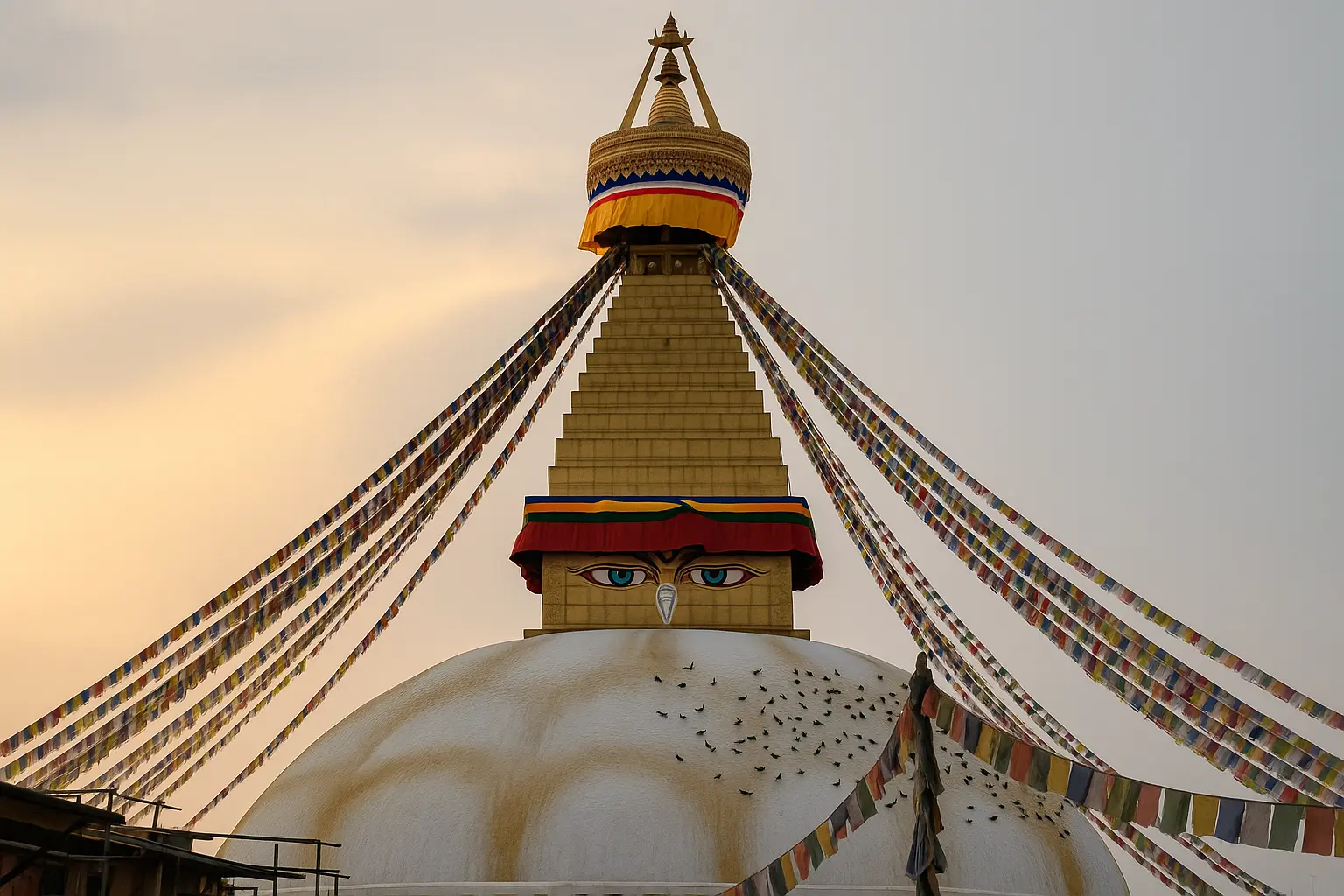
In these hours, Boudhanath feels like a different world. Pilgrims begin their morning kora, prayer wheels turn softly, and the scent of butter lamps fills the air.
Arrive early and take a few moments to simply stand near the stupa, feeling its energy. If you’re staying at Boudha Mandala Hotel, just a few seconds away, you can slip out quietly and be part of this awakening without needing a taxi.
2. What to Wear and How to Act During a Puja
You don’t need to wear anything special to attend a puja at Boudhanath, but modesty and mindfulness are key. Remember, you’re entering into a space that has been honored for centuries.
Here’s how to show respect:
– Wear modest clothing (shoulders and knees covered).
– Remove your shoes before entering a monastery prayer hall.
– Keep your phone silent and in your pocket.
– Walk Kora. Clockwise around the stupa, never counter-clockwise.
– If you’re not sure what to do, sit in the back or to the side. Watch, listen and let the space teach you.
3. You Don’t Have to Know the Ritual
One of the most common questions from first-time attendees is “ What if I don’t understand the chanting?”
You don’t have to. You’re not expected to do anything except be present.
Monks will chant in Tibetan, accompanied by drums, horns, and cymbals. Some prayers may last several minutes; others go on for hours. Let go of trying to understand everything. Instead, feeling the rhythm of drums and the scent of incense is more than enough.
You can close your eyes and softly join in by whispering “Om Mani Padme Hum,” the mantra of compassion. Simply showing up with an open heart is a form of devotion.
4. Bring a Small Offering (Optional but Appreciated)
Offerings aren’t required, but they are a beautiful way to express gratitude and connect more deeply with the moment. Here are simple, thoughtful options: Light a butter lamp (available for a few rupees near the stupa).
Offer flowers, fruit, or a small donation to the monastery.
Bring a white khata scarf if attending a big puja or festival day.
If you’re staying at Boudha Mandala Hotel, our staff can help you arrange these in a culturally appropriate way. We do it for guests often, especially during full moon or festival days like Buddha Jayanti or Lhabab Duchen.
5. Where to Attend a Puja: Monasteries Around Boudhanath
Dozens of monasteries surround the stupa, each with its own character and rhythm. Some great options for visitors:
– Shechen Monastery: Founded by Dilgo Khyentse Rinpoche, this monastery is known for its elegant rituals and open, peaceful grounds.
– Ka-Nying Shedrub Ling: One of the largest monasteries in Boudha, it hosts regular early-morning pujas and is home to a thriving Tibetan Buddhist community.
– Pullahari Monastery: Located on a forested hill above Boudha, it offers a more secluded experience for those seeking stillness and space.
Each offers a different atmosphere. The team at your hotel can check ahead or recommend the best option depending on the day.
6. Why Staying near Boudhanath Deepens Your Experience
A guest once shared,
“Each morning, I watched the sun rise from the rooftop, monks in maroon robes gathering below, and knew exactly when to head down for puja. It became my favorite part of the day.”
This kind of experience is only possible when you’re staying very close to the stupa. At Boudha Mandala Hotel, you wake up with the rhythms of Boudhanath, often walking the kora before breakfast or attending a short puja before work or meditation.
Here you can stay for days or weeks, often attending pujas as part of your daily practice.
What Happens During a Typical Puja at Boudhanath
Still curious? Here’s what you will experience:
– Arrival: The monastery hall begins to fill. Pilgrims light lamps or offer scarves. Visitors take seats quietly at the edges.
– Chanting Begins: Monks, often seated in rows, chant from traditional texts. The sound is deep, rhythmic, and layered.
– Instruments join in: Horns, cymbals, bells, and drums punctuate the recitations, creating a powerful wave of vibration.
– Offerings Made: Attendees offer flowers, fruit, khatas or a donation by walking up respectfully.
– Blessings: At the end, a senior monk may offer blessings by touching your head.
– You may stay for 10 minutes or an hour. There are no fixed rules. Just honor the moment.
You’re Already Welcome
You don’t need to be a Buddhist to attend a puja. You don’t need to chant or even understand. Just be present. That’s enough.
And if you’re seeking a calm, respectful place to stay, Boudha Mandala Hotel welcomes you with open hearts, peaceful rooms, and the stupa just 10 seconds’ walk from your door.